skip to Main Content

China Top 10 Terminal Block Manufacturers?

Choosing among China’s top 10 Terminal Block manufacturers requires more than comparing catalog prices. Buyers should examine product design, production controls, testing records, and after-sales support. A reliable manufacturer should provide clear specifications, stable materials, and traceable quality procedures. These details matter when terminals operate inside control cabinets, power distribution boxes, or industrial automation systems.

This guide introduces ten Chinese manufacturers with practical purchasing factors in mind. We consider product range, connector construction, insulation materials, current ratings, customization ability, and export experience. We also look at certifications, laboratory testing, and communication during sampling. A strong supplier should explain wire sizes, tightening torque, flame-retardant grades, and operating temperatures without vague promises. Small details often reveal real expertise.

However, no ranking is permanently perfect. Company capabilities can change. Some manufacturers excel at compact PCB terminals, while others perform better with high-current barrier products. Public information may also be incomplete or outdated. Therefore, this overview should support your research, not replace factory audits or sample testing. Request current datasheets, inspection reports, and reference projects before making a decision. Test the fit.

The best choice depends on your application, delivery schedule, budget, and required compliance. A dependable supplier should answer technical questions clearly and identify limitations honestly. That behavior builds trust. Whether you need thousands of standard units or a customized Terminal Block assembly, careful verification can reduce installation problems and long-term maintenance costs. Yet even experienced buyers can overlook packaging quality, labeling accuracy, or batch consistency. Those weaknesses deserve attention before production begins.
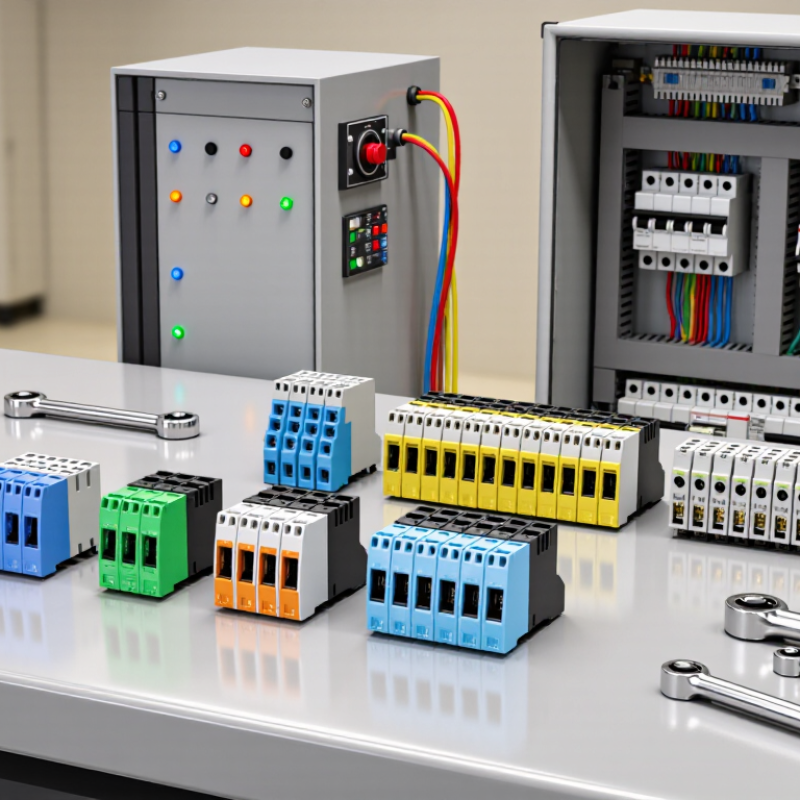
China Top 10 Terminal Block Manufacturers?

Terminal Blocks Explained: IEC 60947-7-1, UL 1059, and 600–1,000 V Ratings

Terminal Blocks Explained: IEC 60947-7-1, UL 1059, and 600–1,000 V Ratings

China’s terminal block sector serves power distribution, industrial automation, and renewable energy projects. A 2024 industry market report estimates the global terminal blocks market at nearly USD 4 billion, with steady growth through 2030. This demand increases pressure on Chinese manufacturers to prove more than production capacity. They must demonstrate traceability, test discipline, and consistent insulation performance.

IEC 60947-7-1 evaluates terminal blocks for low-voltage switchgear and controlgear assemblies. Key checks include temperature rise, conductor security, dielectric strength, and marking. UL 1059 addresses similar products under North American requirements, but its test conditions and construction rules can differ. Confusing these standards creates expensive mistakes.

Voltage ratings need careful reading. A 600 V, 800 V, or 1,000 V marking does not automatically approve a complete panel. Clearance, creepage distance, pollution degree, wire size, torque, and operating temperature affect the real application. For example, a 1,000 V block may require wider spacing and stricter installation control than a compact 600 V design. Field reviews often find loose torque records or unclear wire ranges. That weakness is easy to underestimate. Buyers should request current test reports, material data, and production inspection records, then verify the rating under actual conditions. A certificate helps, but it cannot replace engineering judgment.

How to Evaluate China’s Top 10 Manufacturers Using Five Industry Criteria

China Top 10 Terminal Block Manufacturers

Evaluating China’s top ten terminal block manufacturers requires more than comparing catalog prices. A reliable review should use five industry criteria: manufacturing quality, compliance, engineering capability, supply stability, and customer support. Start with production evidence. Factory visits, process records, and sample inspections reveal more than polished websites. Check screw torque, clamping force, insulation finish, and heat resistance. Small defects often appear during repeated assembly.

Compliance must be verified through current test reports, material declarations, and traceable production batches. Certificates alone are not enough. Ask whether the tested model matches the supplied model. Engineering capability matters when designs include unusual wire sizes, high vibration, narrow spacing, or custom labeling. Request drawings, tolerance data, and a pre-production sample. Technical answers should be specific. Vague replies create risk.

Supply stability includes tooling control, raw material planning, inspection frequency, and realistic lead times. Compare the manufacturer’s promised capacity with actual delivery records. A low quotation may hide packaging damage, unstable plating, or expensive rework. Customer support should provide clear escalation contacts, corrective-action reports, and replacement procedures. I have found that response speed is useful, but technical accuracy matters more. One limitation remains: a single audit cannot represent every production month. Seasonal pressure and subcontracting may change results. Recheck critical suppliers regularly, even after a successful first order.

China’s Top 10 Terminal Block Manufacturers by Product Range and Certifications

China’s top 10 terminal block manufacturers are best compared by product range and certification depth. A strong supplier usually offers DIN rail, PCB, barrier, feed-through, pluggable, and high-current terminal blocks. Spring-clamp and screw-clamp options should support different wiring conditions. Custom colors, markings, and housing materials also reveal production flexibility.

In practical sourcing, certifications matter as much as catalog size. Check IEC 60947-7-1, UL 1059, CE, RoHS, and REACH documentation where relevant. ISO 9001 indicates quality management, but it does not prove every product meets safety requirements. Some manufacturers also provide IATF 16949 systems for automotive projects. Ask for current certificates, test reports, rated voltage data, and sample inspection records. A polished website is not enough. I learned that the hard way.

Tips: Compare creepage distance, insulation material, wire range, torque values, and temperature ratings. Request samples before approving a large order. Test the blocks with your actual wire sizes, tools, and enclosure space. Also check traceability, packaging quality, and response time after a technical question. These small details often separate a dependable factory from a capable-looking supplier. Some comparisons may still feel imperfect, because certification scopes and product series can differ. Recheck every document before final selection.

China’s Top 10 Terminal Block Manufacturers by Product Range and Certifications

This chart presents the product families and internationally recognized compliance references commonly used when evaluating leading Chinese terminal block manufacturers. The product-range categories include feed-through, grounding, disconnect, fuse, multi-level, barrier, and PCB or pluggable terminal blocks. The certification references include IEC 60947-7-1, UL 1059, CSA C22.2 No. 158, and RoHS Directive 2011/65/EU. These are comparison criteria rather than company-specific claims.

Comparing DIN-Rail TS35, PCB, Barrier, and High-Current Terminal Blocks

When assessing China’s top 10 terminal block manufacturers, compare product families, not catalog claims. DIN-rail TS35 blocks suit control cabinets and industrial distribution panels. Check the housing width, rated voltage, current, and temperature range. A secure snap on a TS35 rail saves installation time. However, weak marking can slow maintenance later.

PCB terminal blocks need accurate pin spacing and stable solder joints. Barrier blocks work well where wires need visible separation and firm screw clamping. High-current terminal blocks require larger contact surfaces, stronger torque control, and adequate heat testing. In factory inspections, I examine copper thickness, insulation quality, and screw retention. Small differences become obvious after repeated wiring cycles. My early reviews focused too much on current ratings. That was a mistake. Clearance, creepage, and vibration resistance matter just as much.

Tips: Request samples before bulk purchasing. Test the exact wire size and ferrule type used in your project. Measure temperature rise under continuous load. For TS35 products, check rail compatibility and locking strength. For PCB versions, inspect solderability and connector alignment. Barrier designs should resist loose strands. High-current models deserve torque records and thermal images. Keep certificates, inspection reports, and batch details for traceability. A polished datasheet is useful, but hands-on verification remains essential.

Selecting Suppliers Through Current Ratings, Safety Tests, and Global Compliance

China Top 10 Terminal Block Manufacturers?

Selecting a terminal block supplier requires more than comparing catalog prices. Rated current must match the conductor size, ambient temperature, and number of adjacent circuits. A 20 A label may not remain 20 A inside a crowded control cabinet. Check derating curves, voltage class, insulation material, and tightening torque. Small details matter.

Safety evidence should follow recognized testing methods. IEC 60947-7-1 covers terminal blocks for copper conductors, while UL 1059 addresses North American component requirements. Ask for temperature-rise, dielectric-strength, pull-out, torque, and flammability test records. IEC 60664-1 also helps verify creepage and clearance distances. A datasheet alone can still mislead. I would request samples and inspect clamp movement after repeated wiring.

Global compliance needs documented traceability. Check material declarations against RoHS and REACH requirements, plus product markings for the destination market. ISO 9001 certification supports process control, but it does not prove electrical performance. The 2024 IEA Electricity report recorded strong global demand growth, increasing pressure on reliable distribution components. Market outlooks from Fortune Business Insights also identify industrial automation and electrification as major terminal-block demand drivers. Those figures show opportunity, not quality. Compare the top ten shortlisted manufacturers using batch certificates, laboratory accreditation, warranty terms, and audit access. One overlooked weakness remains common: suppliers may publish peak ratings without explaining test conditions.

China Top 10 Terminal Block Manufacturers? - Selecting Suppliers Through Current Ratings, Safety Tests, and Global Compliance

Reference Category Typical Application Typical Current Rating Typical Voltage Rating Typical Conductor Range Recommended Safety Tests Relevant International Standards Global Compliance Checks
01. Feed-Through Terminal Block Control cabinets, power distribution, industrial machinery, and building automation. 10–125 A 300–1,000 V AC/DC 0.2–50 mm² solid or stranded copper conductors Dielectric withstand Insulation resistance Temperature-rise test Pull-out test IEC 60947-7-1; UL 1059; IEC 60664-1 Verify creepage and clearance, flame rating of insulating material, marking durability, and applicable cULus documentation.
02. Protective Earth Terminal Block Protective bonding of metal enclosures, control panels, machine frames, and electrical equipment. Typically 20–150 A continuous; short-circuit rating depends on design Up to 1,000 V AC/DC 0.5–70 mm² conductors Protective-circuit continuity Short-time current test Corrosion resistance Mechanical strength IEC 60947-7-2; IEC 60204-1; UL 1059 Check green/yellow identification, reliable metal-to-metal contact, resistance stability after vibration, and PE marking requirements.
03. Disconnect or Test Terminal Block Measurement circuits, maintenance isolation, instrumentation, and troubleshooting in control panels. 1–41 A 250–1,000 V AC/DC 0.2–10 mm² conductors Switching endurance Contact resistance Dielectric test Vibration test IEC 60947-7-1; IEC 60947-1; UL 1059 Confirm open-state isolation, test-point accessibility, actuator position indication, and resistance to accidental operation.
04. Fuse Terminal Block Overcurrent protection for control circuits, sensors, actuators, and low-power distribution. 1–32 A, depending on fuse type 250–1,000 V AC/DC 0.2–10 mm² conductors Fuse compatibility Temperature-rise test Short-circuit test Finger-protection test IEC 60947-7-3; IEC 60127; UL 1059 Verify fuse dimensions, interrupting capacity, touch protection, spare-fuse retention, and clear blown-fuse indication.
05. Multi-Level Terminal Block High-density wiring in PLC cabinets, signal distribution systems, and compact automation panels. 2–32 A 150–1,000 V AC/DC 0.14–10 mm² conductors Layer-to-layer insulation Dielectric withstand Wire retention Thermal cycling IEC 60947-7-1; UL 1059; IEC 60664-1 Check clearance between levels, tool access, circuit identification, heat dissipation, and prevention of cross-connection.
06. PCB Terminal Block Power and signal connections on industrial control boards, LED equipment, instrumentation, and embedded systems. 2–41 A 50–600 V AC/DC 0.14–10 mm² conductors PCB solderability Torque test Vibration test Flammability test IEC 60998-2-1; IEC 60947-7-1; UL 1059 Confirm pin spacing, PCB creepage, solder-process compatibility, RoHS and REACH declarations, and terminal torque limits.
07. Barrier or Panel-Mount Terminal Block Power supplies, HVAC equipment, appliances, motors, transformers, and equipment requiring screw-to-wire connections. 15–300 A 300–1,000 V AC/DC 1.5–240 mm² conductors Torque retention Temperature-rise test Flammability test Mounting-strength test IEC 60947-7-1; IEC 60998-2-1; UL 1059 Check enclosure mounting, touch protection, screw-locking performance, terminal spacing, and suitability for the intended equipment standard.
08. Spring-Clamp Terminal Block Vibration-prone machinery, railway-related equipment, industrial automation, and maintenance-sensitive installations. 2–76 A 300–1,000 V AC/DC 0.2–16 mm² conductors Vibration and shock Wire retention Insertion-cycle test Contact resistance IEC 60947-7-1; IEC 60999-1; UL 1059 Evaluate spring-force stability, conductor compatibility, ferrule requirements, tool access, and resistance to loosening under vibration.
09. High-Current Power Terminal Block Battery systems, motor drives, industrial power distribution, renewable-energy equipment, and energy storage. 80–500 A 600–1,500 V DC or AC, design-dependent 16–300 mm² conductors or busbar connections High-current temperature rise Short-circuit withstand Torque and pull-out Thermal cycling IEC 60947-7-1; IEC 60664-1; applicable equipment-level standards Confirm DC voltage suitability, creepage under pollution conditions, touch protection, heat dissipation, and documented short-circuit capability.
10. High-Temperature or Ceramic Terminal Block Heating equipment, ovens, furnaces, lighting systems, and applications exposed to elevated ambient temperatures. 10–150 A, temperature-dependent 300–1,000 V AC/DC 0.5–50 mm² conductors High-temperature aging Dielectric withstand Flame resistance Thermal shock IEC 60947-7-1; IEC 60695 series; UL 94 material evaluation Check continuous-use temperature, ceramic or polymer material data, derating curves, flame behavior, and suitability for the actual enclosure temperature.

Note: The ratings shown are typical industry reference ranges for supplier evaluation, not guaranteed ratings for every product. Final selection should be based on the manufacturer’s current derating curves, verified test reports, applicable installation conditions, and certification scope.

Back To Top
