China Top 10 Hydraulic Machinery Manufacturers?
China has become a major force in the global hydraulic machinery industry. Its manufacturers serve construction, agriculture, mining, material handling, marine engineering, and industrial automation. Behind a modern excavator, a compact power unit, or a factory press, hydraulic systems often control movement, lifting, and pressure.
This guide introduces ten leading Chinese hydraulic machinery manufacturers and explains what makes each company notable. The review considers product range, engineering capability, manufacturing scale, quality systems, export experience, and after-sales support. It also examines practical details, such as valve response, pump efficiency, cylinder durability, noise control, and spare-parts availability. These factors matter when equipment works beside a dusty quarry or inside a high-cycle production line.
The ranking is not absolute. Market position can change with new investments, certifications, partnerships, and customer feedback. Public information also differs between companies, which makes direct comparison imperfect. That is worth remembering. A large factory may not suit every buyer, while a smaller specialist may offer faster technical support. Real performance depends on application, maintenance, installation quality, and operating conditions. Buyers should verify specifications, test reports, warranty terms, and local service arrangements before making a decision. This article offers a structured starting point, not a substitute for technical due diligence. Expect useful evidence, but also a few gray areas where independent verification remains necessary.
What Is Hydraulic Machinery and Why Does China Lead the Industry?
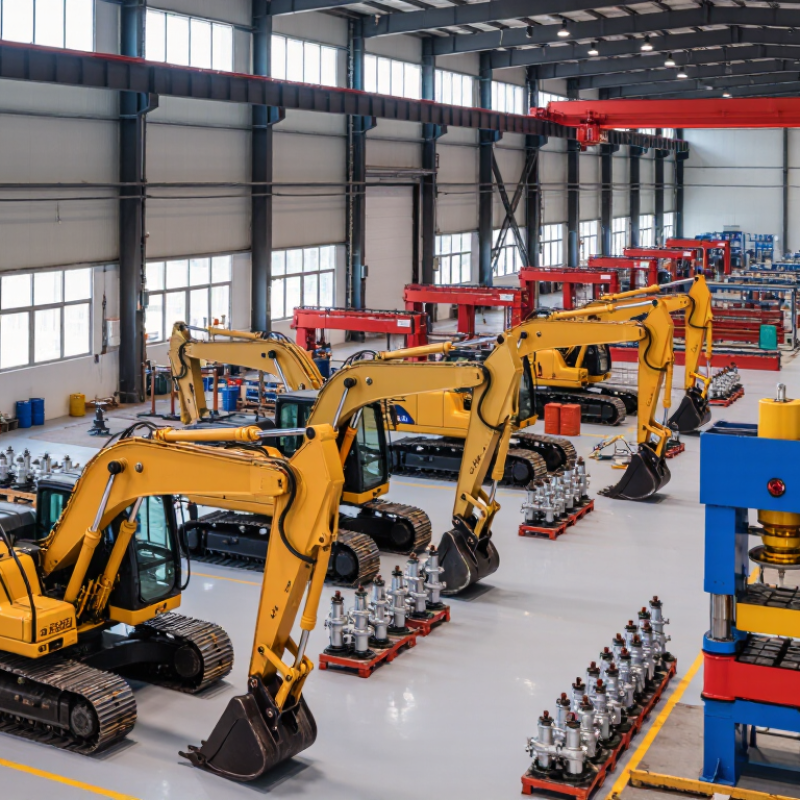
Hydraulic machinery uses pressurized fluid to transmit and control power. A pump moves oil, valves direct its flow, and cylinders turn pressure into force. On a construction site, hydraulics can lift an excavator boom; in a factory, they can clamp a mold or press a metal part. The technology is valued for compact power and precise load control. It also needs careful maintenance: contaminated fluid can wear pumps and valves quickly.
China’s advantage rests on a broad manufacturing base, dense component supply chains, and strong demand from construction and industrial production. UNIDO’s International Yearbook of Industrial Statistics 2024 puts China’s share of global manufacturing value added at about 31.8% in 2022. The International Federation of Robotics reports that China installed 276,288 industrial robots in 2023, 51% of the global total. These figures describe manufacturing capacity, not hydraulic output alone, so they should not be treated as direct proof of sector leadership. Scale helps, but it is not the whole story. Precision, reliable seals, efficient pumps, and consistent quality still determine whether a hydraulic system performs well over years of hard use.
How to Evaluate China’s Top Hydraulic Machinery Manufacturers
China Top 10 Hydraulic Machinery Manufacturers?
How to Evaluate China’s Top Hydraulic Machinery Manufacturers
Evaluating a hydraulic supplier takes more than comparing quoted prices. Check whether its products fit your duty cycle, pressure, flow, fluid, and operating temperature. Request endurance-test results, inspection records, and component traceability. A cylinder tested at one pressure may not prove reliable under repeated shock loads. Small details matter.
Allied Market Research’s Hydraulic Equipment Market report estimated the global market at $43.3 billion in 2021 and forecast $55.5 billion by 2031. This is market context, not proof of any supplier’s capability. Ask for test methods and acceptance criteria, then compare them with relevant standards. For fluid cleanliness, check how the supplier uses ISO 4406 codes. Verify performance under your actual operating conditions. Data sheets can look too tidy. Real machines are not.
Tips: Request a factory audit or live video inspection. Look for a pressure-test bench, calibration labels, and finished parts beside inspection gauges. Confirm spare-parts lead times, warranty exclusions, and support response times in writing. Then test a pilot unit. Track leakage, noise, temperature, and downtime before scaling up.
China Top 10 Hydraulic Machinery Manufacturers? How to Evaluate China’s Top Hydraulic Machinery Manufacturers
This evaluation framework uses a 100-point weighting model for comparing leading hydraulic machinery manufacturers without displaying company or brand data. Product reliability, technical capability, customization, and after-sales support receive the highest weights because they have the greatest impact on long-term equipment performance and total cost of ownership.
China’s Top 10 Hydraulic Machinery Manufacturers by Market Strength
China Top 10 Hydraulic Machinery Manufacturers?
China’s top ten hydraulic machinery manufacturers should be assessed by market strength, not factory size alone. Strong companies usually combine stable production, verified quality systems, engineering depth, and dependable after-sales service. Their equipment appears in excavators, presses, agricultural systems, mining vehicles, and automated production lines. Field experience matters.
A practical evaluation should examine annual delivery capacity, export coverage, product reliability, and response speed. It should also consider research investment, patent activity, testing facilities, and cooperation with equipment builders. A manufacturer with fewer products may still rank highly if its core valves, pumps, or power units perform consistently under heavy loads. Service networks matter too. A delayed seal can stop an entire production line.
Market strength is not always easy to measure. Public sales figures may be incomplete, while private contracts remain undisclosed. Some manufacturers look impressive online but provide limited technical support after installation. That gap deserves attention. No ranking is perfect. It should be checked against customer feedback, maintenance records, delivery performance, and independent certification. A reliable supplier explains pressure ratings clearly, documents testing procedures, and admits product limits. That honesty is valuable. Cost still matters, but the cheapest quotation can become expensive after repeated downtime, oil leakage, or difficult spare-parts sourcing.
Core Products, Technologies, and Industries Served by Each Manufacturer
A useful review of ten hydraulic machinery manufacturers should compare working systems, not catalog breadth. Core products often include hydraulic pumps, cylinders, valves, power units, and filtration assemblies. Look for load-sensing controls, variable-displacement pumps, and leak-resistant seals. These features affect response time, heat, and maintenance intervals. Small details matter.
Industries served reveal how well each supplier understands real operating conditions. Construction equipment needs compact, shock-resistant circuits; factories may prioritize repeatable motion and uptime. Mining and material handling demand components that tolerate dust, vibration, and heavy loads. The U.S. Department of Energy’s Improving Pumping System Performance (2006) estimates that pumping systems use nearly 20% of global electricity. That figure covers pumping broadly, not hydraulic presses alone, but it highlights why efficiency deserves scrutiny. Ratings can flatter. Ask for duty-cycle data, test conditions, and service-life assumptions.
Tips: Match the machine’s pressure, flow, and duty cycle before comparing quotations. Request a circuit diagram and a clear maintenance schedule. Test under load. A polished specification sheet cannot reveal every weak point; field performance sometimes disagrees with the brochure.
How to Choose the Right Chinese Hydraulic Machinery Manufacturer
When comparing Chinese hydraulic machinery manufacturers, begin with the machine’s actual duty, not a broad catalog. Specify operating pressure, flow rate, fluid type, temperature range, cycle time, and expected daily operating hours. Ask for a written configuration sheet covering the pump, valves, seals, motor, and controls. Details matter. Request test records for the same model, including how pressure, leakage, noise, and oil temperature are checked before shipment. A photograph of a test bench is useful, but it cannot replace dated results or clear acceptance limits.
Assess the supplier’s engineering response as carefully as its quotation. Can the team explain how selected components handle pressure spikes or contaminated oil? Request drawings, manuals, spare-parts lists, warranty terms, and realistic lead times. Check whether parts are identified by standard specifications rather than vague descriptions. If possible, arrange a video inspection or independent pre-shipment check, and record agreed test conditions in the purchase documents. Compare ownership costs, including installation, training, maintenance, and downtime—not just the initial price. A low quote may be sensible; sometimes it leaves important work unanswered. That distinction is easy to miss, even for experienced buyers.
 skip to Main Content