Ultimate Tips for Steel Making Process You Must Know?
The Steel Making Process is a complex journey that transforms raw materials into a fundamental resource for various industries. Understanding this process is crucial for anyone involved in metallurgy or manufacturing. Steel production involves several stages, each requiring precision and expertise.
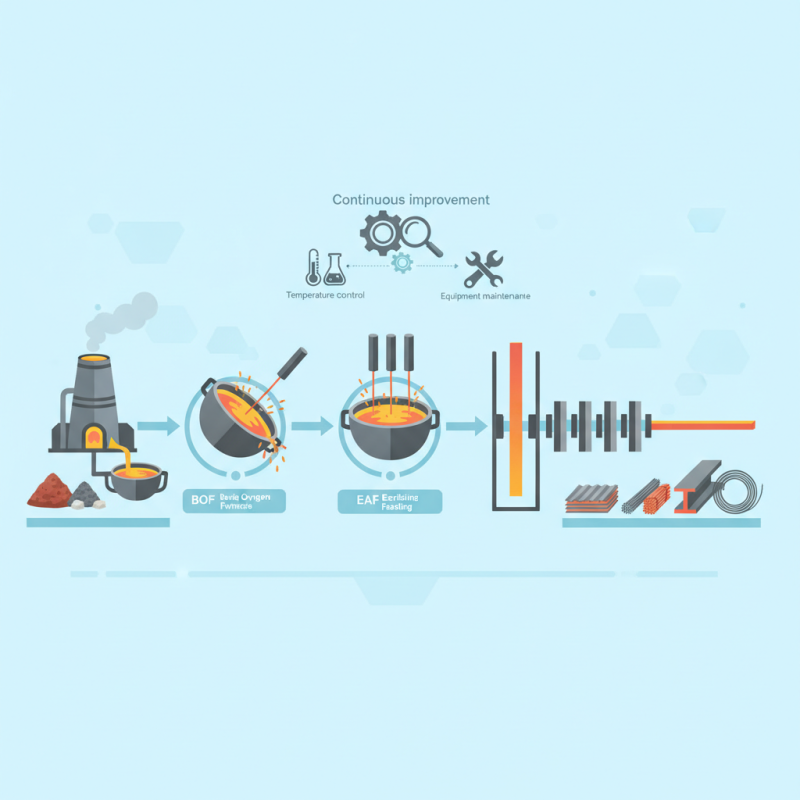
From iron ore extraction to the final shaping of steel products, this process demands careful monitoring. Key factors include temperature control, chemical compositions, and equipment maintenance. The slightest deviation can lead to significant issues. A single mistake can compromise quality, resulting in financial losses.
Many professionals overlook the need for continuous improvement. Reflection on past practices is essential. Despite advancements, challenges persist within the Steel Making Process. By examining these intricacies, we can find opportunities for growth and innovation. Embracing a mindset of learning will enhance both knowledge and outcomes in steel production.
Understanding the Basics of Steel Making: Key Terminology and Concepts
Steel making is a complex process with essential terminology and concepts that shape its foundation. Primary methods include the Basic Oxygen Process (BOP) and Electric Arc Furnace (EAF). BOP uses hot metal and scrap steel, producing over 70% of the world's steel. In contrast, EAF primarily recycles scrap steel, which accounted for 30% of global steel production in 2021. Understanding these processes is crucial for anyone working in or studying the steel industry.
Key terms like "alloy," "ductility," and "carbon content" play a significant role in steel quality. Alloying elements enhance durability and resistance. Ductility indicates how much a material can be stretched without breaking. According to the World Steel Association, carbon content directly affects the strength and hardness of steel. However, variations in recycling processes can lead to inconsistencies in material properties, which must be addressed.
Industry reports highlight the challenges of sustainable practices. The steel industry's carbon emissions account for approximately 7% of global total emissions. Technological advancements aim to improve efficiency, yet hurdles remain. Continuous efforts in refining production techniques and adopting renewable energy sources are critical for achieving a sustainable future in steel making. Understanding these core concepts is vital for driving innovations and addressing the industry's challenges.
The Crucial Steps in the Steel Making Process: From Ore to Finished Product
The steel making process involves multiple crucial steps that transform raw ore into finished products. It begins with the extraction of iron ore, which is a primary raw material. The ore must be crushed and concentrated to remove impurities. This stage greatly influences the overall quality of the steel produced. It's a labor-intensive process that requires careful handling to minimize waste.
Next, in the smelting phase, coke is used to heat the iron ore in a blast furnace. This chemical reaction reduces iron oxide to molten iron. Controlling the temperature and coke quality is vital here. If the temperature is too low, impurities may remain, affecting steel strength. After smelting, the molten iron is often combined with scrap steel and various alloying elements. This blending significantly alters the properties of the final product.
Throughout these stages, quality assurance is essential. Regular testing ensures that the steel meets required specifications. However, errors can occur. Inconsistent ore quality or incorrect blending ratios can lead to defective products. The steel industry must continuously evolve to address these challenges and improve efficiency.
Best Practices for Raw Material Selection in Steel Production
Selecting raw materials for steel production is a critical step. Quality of materials significantly affects the final product. Different types of iron ores, coal, and alloys each bring unique properties.
Choose high-grade iron ores with low impurities. This helps achieve better strength and durability in steel. Additionally, sourcing from reputable suppliers ensures consistency in material quality. Sometimes, recycled scrap steel can also be beneficial. It’s eco-friendly and often cost-effective, but its quality varies greatly.
Consider the balance of cost and quality. Cheaper materials may lead to poor results. Regular testing and research are essential for understanding material behavior. It’s not always perfect; sometimes, unexpected issues arise during production. Engage experts to analyze materials and refine choices. This approach minimizes risks and enhances overall reliability in the steel-making process.
Steel Production: Raw Material Selection
Innovative Technologies Enhancing Efficiency in Steel Manufacturing
Innovative technologies play a crucial role in enhancing efficiency in the steel manufacturing process. Advanced automation and monitoring systems allow manufacturers to optimize operations. Real-time data collection from sensors facilitates better decision-making on the production floor. This technology increases productivity and reduces waste. Implementing automation can also minimize human error, leading to higher quality steel products.
Investing in innovative furnaces can significantly improve energy consumption. Electric arc furnaces, for instance, use recycled materials effectively. This method not only cuts costs but also supports sustainability. It's essential to consider energy sources and their environmental impact during steel production. Adopting greener technologies poses challenges, but the long-term benefits are worth exploring.
Tip: Regular training for staff is vital to increase familiarity with new technologies. Keeping the workforce updated ensures safety and efficiency. Monitor the adoption rate of new equipment closely. Assess areas where improvement is needed. Overall, the focus should remain on continuous refinement of the steel-making process, embracing innovation, and understanding its limitations.
Quality Control Measures in Steel Production: Ensuring Consistency and Standards
Quality control is a critical aspect of steel production. It ensures that each batch meets the required standards. Effective measures need to be in place throughout the steel-making process. Regular inspections at every stage can catch potential issues early. Quality checks should include chemical composition tests and mechanical properties assessments.
Understanding the importance of variability allows for better control. Even small fluctuations can impact the final product. Implementing advanced techniques like Non-Destructive Testing (NDT) can enhance reliability. These methods help to identify internal defects without damaging the material. By focusing on consistency, producers can improve customer satisfaction.
However, some challenges persist in maintaining quality. Equipment may malfunction, leading to inconsistencies. Training workers is vital. Skilled hands can make a significant difference. Encouraging a culture of attention to detail fosters better practices. Quality is not just about measurement; it involves continuous reflection and improvement.
Ultimate Tips for Steel Making Process You Must Know? - Quality Control Measures in Steel Production: Ensuring Consistency and Standards
| Quality Control Measure | Description | Frequency | Responsible Party |
| Chemical Composition Analysis | Regular testing of raw materials to ensure proper alloying elements are within standards. | Per Batch | Quality Control Team |
| Temperature Monitoring | Continuous monitoring of furnace temperature to maintain optimal melting conditions. | Continuous | Production Supervisor |
| Mechanical Testing | Testing tensile strength, hardness, and ductility of produced steel. | Weekly | Material Testing Lab |
| Visual Inspection | Routine inspection of steel surface for defects or irregularities. | Every Shift | Floor Inspectors |
| Dimensional Inspection | Ensuring finished products meet specified dimensions and tolerances. | Per Batch | Quality Assurance Team |
 skip to Main Content
