How to Choose a Solar Independent Power Wall?
Choosing a Solar Independent Power Wall is not simply a matter of selecting the largest battery. It is a decision about resilience, safety, daily energy habits, and long-term value. A suitable system should match your solar array, household demand, local weather, and backup priorities.
Elon Musk, a prominent energy-storage industry leader, once explained, “The fundamental problem with solar energy is that the sun doesn’t shine at night.” A Solar Independent Power Wall addresses that limitation by storing daytime electricity for evening use, cloudy mornings, or unexpected grid interruptions. However, storage capacity alone does not guarantee dependable performance.
Look beyond the headline capacity. Examine usable energy, continuous output, battery chemistry, warranty terms, inverter efficiency, and installation requirements. A 10-kilowatt-hour battery may support lights, refrigeration, internet equipment, and a small pump. It may not run central air conditioning or large electric heating systems for long.
Safety matters.
Certified protection systems, thermal management, and professional installation deserve close attention. Ask whether the unit can operate during outages without manual intervention. Check its performance in cold or hot conditions. Review monitoring features, service coverage, and replacement costs.
Real experience also exposes inconvenient details. Some systems lose usable capacity over time. Others perform well technically but offer weak local support. I would not choose a product before comparing its tested output with my actual evening load. That step is easy to skip, and it can produce expensive disappointment.
This guide explains how to evaluate a Solar Independent Power Wall with practical criteria, credible specifications, and realistic household scenarios. No battery is perfect. The best choice is the one that fits your energy needs honestly.
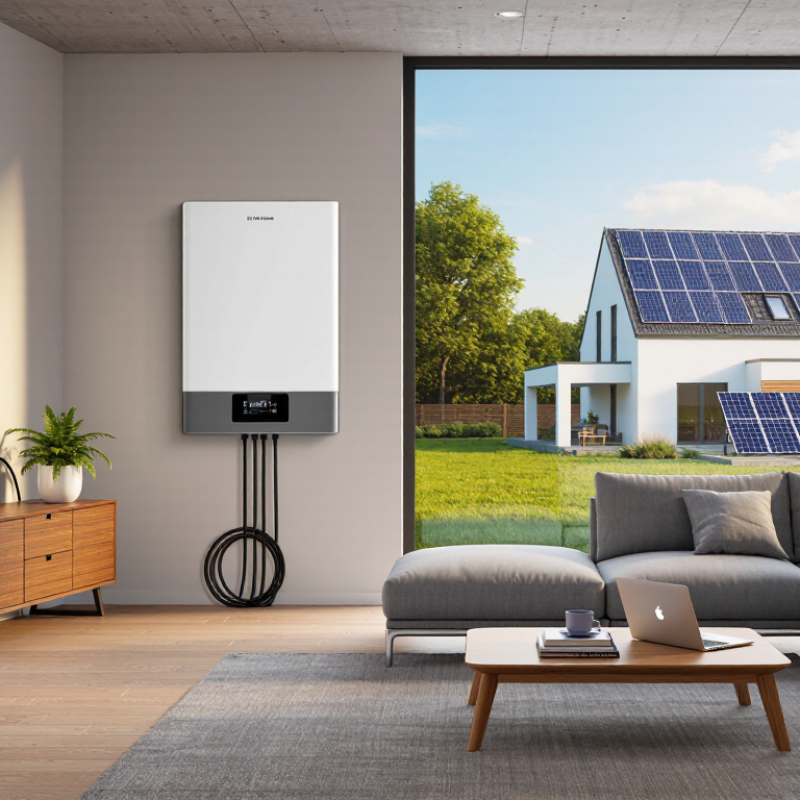
Define Loads and Size the Power Wall by Daily kWh and Peak kW
How to Choose a Solar Independent Power Wall?
Define loads before choosing battery capacity. List every essential device, its wattage, and daily operating hours. A refrigerator may run intermittently, while a water pump can create a brief starting surge. Measure it twice. The U.S. Energy Information Administration’s Residential Energy Consumption Survey reports average household use near 899 kWh monthly, or about 30 kWh daily. However, an independent system usually serves critical loads, not the entire home. Separate lighting, refrigeration, communications, medical equipment, and pumping from optional appliances.
Calculate daily energy in kilowatt-hours, then estimate the required autonomy. If critical loads consume 6 kWh daily, two backup days require 12 kWh before losses. With an 85% design allowance, the battery should provide about 14.1 kWh of usable capacity. NREL’s U.S. Solar Photovoltaic System and Energy Storage Cost Benchmark emphasizes evaluating usable storage, not only nameplate capacity. That distinction is easy to miss.
Peak power requires a separate calculation. Add the running watts of devices operating together, then include motor-starting surges. A 1.2 kW pump may briefly demand twice that amount. Select an inverter with suitable continuous and surge ratings. IEA’s Batteries and Secure Energy Transitions report notes that battery storage must expand substantially for reliable clean-energy systems, but bigger is not automatically better. My early estimates ignored seasonal refrigeration loads. They looked reasonable, yet failed during hot weeks. Recheck actual consumption after installation. Forecasts can be wrong.
How to Choose a Solar Independent Power Wall? — Define Loads and Size the Power Wall by Daily kWh and Peak kW | Example Load Profile | Estimated Daily AC Energy | Estimated Peak Load | Suggested Inverter Rating | Battery Capacity for 1 Day | Approximate PV Array Size |
| Essential loads: lighting, refrigerator, communications, and device charging | 3 kWh/day | 1.2 kW | 2 kW continuous | 4.2 kWh nominal | 1.0 kW |
| Small household: essential loads plus efficient cooking or occasional small appliances | 8 kWh/day | 3.5 kW | 5 kW continuous | 11.1 kWh nominal | 2.7 kW |
| Medium household: regular appliance use, lighting, refrigeration, and home electronics | 15 kWh/day | 6.0 kW | 8 kW continuous | 20.8 kWh nominal | 5.0 kW |
| High-use household: multiple major appliances and higher simultaneous demand | 25 kWh/day | 10.0 kW | 15 kW continuous | 34.7 kWh nominal | 8.3 kW |
| Sizing assumptions: Illustrative load profiles, not equipment specifications. Battery figures allow for one day of the listed AC energy, with 80% usable battery depth of discharge and 90% inverter efficiency. PV estimates assume 4 peak-sun-hours per day and a 75% overall system performance factor. Inverter ratings include an approximate 25% margin above estimated peak load; verify motor-starting surge requirements separately. Actual sizing depends on measured loads, location, weather, autonomy needs, and system losses. |
Compare LFP and NMC Batteries: 6,000+ Cycles and Energy Density
How to Choose a Solar Independent Power Wall?
For a solar independent power wall, battery chemistry affects safety, lifespan, and usable capacity. LFP cells usually provide stronger cycle durability than NMC cells. Under controlled laboratory conditions, quality LFP systems can exceed 6,000 cycles, although heat, deep discharge, and poor balancing reduce real-world life. NMC often offers higher energy density, commonly around 150–250 Wh/kg at cell level. LFP is typically lower, near 90–160 Wh/kg. These ranges vary by design and testing method.
The International Energy Agency’s Global EV Outlook 2024 reports that LFP batteries gained major market share because of lower costs and material availability. BloombergNEF’s 2024 battery survey also shows continuing cost advantages for LFP chemistry. NMC remains attractive where limited wall space matters. A compact apartment may benefit from its higher energy density. A hot garage may favor LFP’s thermal stability. Neither chemistry is perfect. Real performance depends on the inverter, ventilation, charge settings, and installation quality.
Tips: Check the warranty’s cycle definition, not just the headline number. Ask whether 6,000 cycles means 100% depth of discharge or a gentler test. Compare usable kilowatt-hours, not only nameplate capacity. Keep the battery within its recommended temperature range. I would also leave expansion space; household demand often grows after the first winter.
How to Choose a Solar Independent Power Wall?
Compare lithium iron phosphate (LFP) and nickel manganese cobalt (NMC) batteries using cycle life and gravimetric energy density.
Reference values: LFP batteries are represented at approximately 6,000 cycles and 140 Wh/kg, while NMC batteries are represented at approximately 2,500 cycles and 220 Wh/kg. These are typical cell-level industry reference values; actual performance varies with depth of discharge, temperature, charging speed, and system design.
Verify Safety Through UL 9540, IEC 62619, and NFPA 855
How to Choose a Solar Independent Power Wall?
A solar independent power wall should be judged by evidence, not appearance or advertised capacity. UL 9540 evaluates the complete energy storage system, including batteries, controls, and safety functions. Ask for a current certificate covering the exact model and configuration. A component-level approval may not cover the assembled system. This detail is often missed.
IEC 62619 addresses industrial lithium secondary batteries, focusing on electrical, mechanical, and thermal safety. Check whether testing covers the installed battery chemistry and operating conditions. NFPA 855 provides installation guidance for stationary energy storage, including spacing, fire protection, ventilation, and emergency response. Local authorities may apply additional requirements. The International Energy Agency reported that global battery storage additions exceeded 40 GW in 2023, showing how quickly deployment is expanding. Fast growth makes careful verification more important.
During a site review, inspect cable routing, enclosure seals, temperature monitoring, and shutdown access. Request test reports, installation instructions, and documented fault responses. I would also confirm warranty limits under high heat and frequent cycling. Certification reduces risk, but it does not remove poor installation practices. A wall-mounted unit can look secure while hiding inadequate clearances. That is the uncomfortable part. Ask an independent qualified professional to verify the final installation, because paperwork alone cannot measure every site condition.
Assess Warranty, Degradation, and 10–15-Year Service Life
How to Choose a Solar Independent Power Wall?
Assess Warranty, Degradation, and 10–15-Year Service Life
A solar power wall should be judged beyond its advertised capacity. Read the warranty line by line. Check the coverage period, cycle limit, retained capacity, and replacement terms. A ten-year warranty may include strict daily discharge limits. It may also become prorated after several years. Ask whether labor, shipping, and on-site diagnosis are included. These details matter when the battery fails during a winter outage.
Degradation is equally important. Most lithium battery systems gradually lose usable capacity through cycling and age. Compare the guaranteed capacity at year ten, not only the new-system rating. A practical unit should still support essential loads after years of evening use. Review operating temperature ranges, depth-of-discharge limits, and thermal protection. Poor ventilation can accelerate wear. A shaded, dry wall location is usually safer than a hot garage corner.
A 10–15-year service life is possible, but it is not automatic. The installer should provide maintenance procedures, firmware support, spare-parts access, and a clear repair pathway. Ask who handles service after the installer closes. That question is often overlooked. My checklist is not perfect, because actual aging depends on weather, usage, and charging habits. Still, measured data is more trustworthy than optimistic promises. Request independent test results and a written capacity guarantee before signing.
 skip to Main Content
