skip to Main Content
Choosing the right Drain Trim Set is a small decision with lasting consequences. It affects water control, cleaning, appearance, and daily comfort. A trim set may include a drain cover, overflow plate, stopper, and matching hardware. Each component must suit the bathtub or shower opening.
The U.S. Environmental Protection Agency reports that household leaks waste nearly one trillion gallons of water annually across the United States. That figure highlights a practical concern: poor fit and worn seals should never be treated as minor details. A beautiful finish cannot compensate for a leaking connection. The EPA’s WaterSense program also emphasizes efficient plumbing products, proper installation, and performance verification. Although a Drain Trim Set does not control every aspect of water consumption, its compatibility supports a more reliable plumbing system.
Professional guidance from ASPE’s Plumbing Engineering Design Handbook and IAPMO standards places strong emphasis on sizing, material selection, drainage performance, and installation conditions. These principles matter during remodeling. Measure the existing drain opening. Check the thread type. Confirm the overflow configuration. Then compare stainless steel, brass, plastic, and coated finishes. Small differences can cause costly returns.
Looks can mislead.
In my experience, homeowners often choose chrome first and measurements later. That order creates avoidable problems. Finish durability, stopper operation, corrosion resistance, and replacement-part availability deserve equal attention. No single trim set suits every project. This guide explains how to evaluate compatibility, installation demands, maintenance needs, and design goals before purchasing a Drain Trim Set. It also acknowledges an uncomfortable truth: product descriptions are not always as precise as the plumbing underneath them.
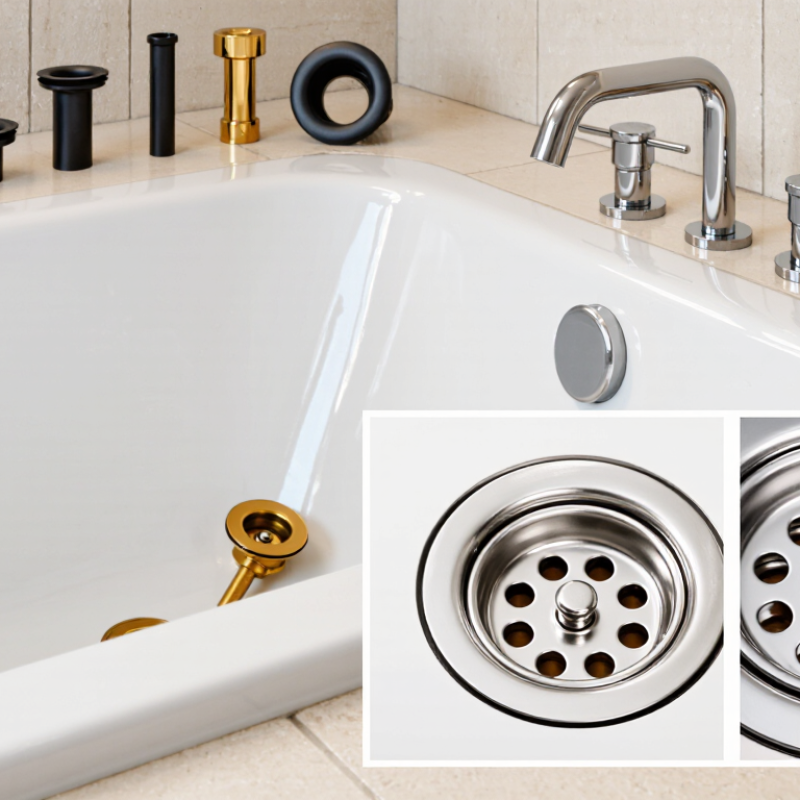
A drain trim set is more than a decorative finishing piece. It controls water movement, protects the opening, and supports a clean, serviceable installation. The U.S. Environmental Protection Agency reports that household leaks waste nearly 1 trillion gallons of water each year. A poor seal may not cause immediate flooding, but it can create hidden waste and structural damage.
Understanding each component makes selection easier. The drain flange sits inside the basin or shower floor and connects to the drain body. Its gasket forms the primary seal against the finished surface. The stopper controls water retention, while the overflow cover protects the overflow opening and guides excess water away. The tailpiece connects the drain body to the trap. Check its diameter, thread type, and available clearance before ordering. A trim set can look correct and still fail when dimensions conflict.
Tips: Measure the opening, drain depth, and overflow position twice. Match the set with the fixture material and local plumbing requirements. The EPA WaterSense program notes that household leaks can waste more than 3,000 gallons annually from one leaking faucet. This figure concerns faucets, not drains, but it shows why small sealing errors deserve attention. Choose corrosion-resistant materials for wet areas, and inspect the gasket after hand-tightening. Over-tightening is a common mistake. I still see it happen. Availability of replacement parts also matters, even when the finish looks perfect.
How to Choose the Right Drain Trim Set for Your Project?
Start by identifying the drain type, not the finish. A lavatory drain usually differs from a shower, bathtub, floor, or linear drain assembly. Check whether the system uses a pop-up, grid, lift-and-turn, or removable strainer. Measure the drain opening, pipe diameter, flange depth, and overflow connection. Small differences can prevent a watertight fit.
Measure twice. Fit matters.
Common residential sizes include 1¼-inch lavatory drains, 1½-inch tub drains, and 2-inch shower drains. However, local plumbing codes control the final selection. The 2024 International Plumbing Code links fixture drainage requirements to trap dimensions and drainage fixture units. Confirm the applicable table before ordering. A trim cover cannot correct an undersized or incompatible drain body.
Installation details deserve equal attention. Verify thread type, gasket position, waste outlet alignment, and available clearance beneath the fixture. For remodels, photograph the existing assembly before removal. That simple step often reveals hidden adapters or nonstandard connections. I once treated trim as a visual purchase; that assumption created unnecessary rework. It is an easy mistake to repeat.
Water performance also matters. The U.S. Environmental Protection Agency reports that household leaks can waste nearly 10,000 gallons annually. A poorly sealed drain may increase waste, damage surrounding materials, and encourage mold growth. Choose corrosion-resistant materials for wet areas, but check compatibility with nearby metals. A polished finish is attractive. It is not proof of durability. When uncertain, confirm measurements with a licensed plumbing professional and retain the installation instructions.
How to Choose the Right Drain Trim Set for Your Project?
Material choice should match water exposure, cleaning habits, and the surrounding fixture. Solid brass offers weight and rigidity, while stainless steel resists corrosion in humid bathrooms. Zinc-based trim usually costs less, but its coating may wear faster around threaded areas. Plastic components can work well behind walls, though visible plastic often feels less refined. I have seen attractive trim fail because the installer ignored the drain body material.
Finish selection is more than a color decision. Brushed surfaces hide water spots and fingerprints better than polished chrome. Matte black creates strong contrast, but mineral deposits can become obvious on poorly filtered water. PVD finishes generally resist abrasion, yet they are not indestructible. The 2024 U.S. Bathroom Trends Study reported continued demand for mixed-metal bathrooms, making finish coordination increasingly important. Still, matching every fixture perfectly can look less natural than using two controlled finishes.
Compatibility requires careful measurement. Check the drain opening, thread size, overflow design, and tailpiece length. A bathroom sink commonly uses a 1¼-inch connection, while many tub drains use 1½ inches. Vessel sinks may require extended pop-up assemblies. The EPA WaterSense program limits qualifying bathroom faucets to 1.5 gallons per minute, at least 30% below the older 2.2-gallon standard. That lower flow does not change drain size, but it makes proper basin drainage more noticeable. Measure twice. A beautiful trim set cannot correct the wrong connection.
| Drain Trim Material | Common Finishes | Key Characteristics | Recommended Applications | Compatibility Factors | Maintenance Considerations |
|---|---|---|---|---|---|
| 304 Stainless Steel | Brushed, polished, satin | Good corrosion resistance, strong construction, and suitable for most indoor wet areas. | Residential bathrooms, kitchens, showers, and general renovation projects. | Confirm drain opening diameter, thread type, gasket position, and connection to the waste pipe. | Clean with mild soap and water; avoid chlorine-based cleaners and abrasive pads that can damage the surface. |
| 316 Stainless Steel | Brushed, polished, satin | Higher resistance to chloride-related corrosion than 304 stainless steel because it contains molybdenum. | Coastal locations, humid environments, outdoor wet areas, and projects exposed to salt air. | Check that the surrounding drain body, fasteners, and plumbing components are also suitable for the environment. | Rinse away salt deposits regularly and dry the surface to reduce staining and surface buildup. |
| Solid Brass | Polished chrome, brushed nickel, polished brass, bronze tones, matte black | Rigid, durable, and commonly used where a substantial metal trim component is preferred. | Premium bathroom installations, visible shower drains, and decorative renovation projects. | Verify the drain body's material, nut size, thread standard, and whether the finish is intended for continuous wet exposure. | Use non-abrasive cleaners; acidic or harsh chemicals may discolor plated or treated surfaces. |
| Plated Zinc Alloy | Chrome, nickel, bronze tones, matte black | Cost-effective decorative option with a broad range of visual finishes; less resistant to prolonged moisture than stainless steel or brass. | Budget-conscious indoor bathroom projects with moderate exposure to water. | Use only where the trim is rated for the intended wet-area application and where the finish can remain well ventilated and dry between uses. | Wipe dry after cleaning; do not use scouring powders, wire brushes, or strong solvents. |
| ABS or PVC | White, black, or color-matched molded finishes | Lightweight, non-corrosive, and generally economical; appearance and temperature limits vary by product. | Utility sinks, concealed components, lightweight installations, and corrosion-prone environments. | Confirm the plastic type, solvent-cement requirements, pipe size, trap connection, and temperature rating. | Avoid solvents and excessive heat; clean with a mild detergent and a soft cloth. |
| Cast Iron | Enamel-coated, painted, or protective coated | Heavy and rigid, with good durability; unprotected surfaces can be vulnerable to rust. | Heavy-duty floor drains and compatible commercial or industrial drainage systems. | Check structural support, flange dimensions, grate load rating, and connection method before installation. | Keep coated surfaces intact and repair damaged areas promptly to limit corrosion. |
| Finish | Visual Effect | Water Spot Visibility | Best-Match Design Styles | Care Notes |
|---|---|---|---|---|
| Polished Chrome | Bright, reflective, and visually clean | Usually high; water spots and fingerprints are easy to see. | Modern, traditional, and minimalist interiors | Dry after cleaning to preserve shine and reduce mineral deposits. |
| Brushed or Satin Nickel | Soft metallic appearance with a directional texture | Moderate to low, depending on the texture. | Contemporary, transitional, and warm neutral interiors | Wipe in the direction of the grain and avoid abrasive products. |
| Matte Black | Low-gloss, high-contrast appearance | Mineral residue may be visible, especially in hard-water areas. | Industrial, modern, contemporary, and monochrome interiors | Use pH-neutral soap and a soft cloth; avoid waxes and abrasive cleaners. |
| Bronze-Tone Finish | Warm, traditional, or aged-metal appearance | Generally moderate; the result depends on the coating and texture. | Traditional, rustic, transitional, and vintage-inspired interiors | Do not polish aggressively, as this may alter the intended color or protective coating. |
| Factor to Verify | What to Check | Why It Matters |
|---|---|---|
| Drain Opening Size | Measure the existing or planned opening and compare it with the trim set's specified diameter. | A small dimensional mismatch can prevent proper seating and sealing. |
| Drain Type | Identify whether the installation uses a shower drain, floor drain, sink drain, linear drain, or specialty drain. | Trim sets are not universally interchangeable between drain types. |
| Connection and Thread Standard | Confirm thread size, thread type, pipe diameter, and the required solvent-cement or mechanical connection. | Different standards and connection methods may not seal or assemble correctly. |
| Sealing Method | Check gasket material, flange design, sealant requirements, and contact surfaces. | Correct sealing helps prevent leaks and protects the surrounding floor or cabinet. |
| Load and Flow Requirements | Review grate load rating, drainage capacity, outlet size, and local plumbing requirements. | The trim must be suitable for the expected foot traffic, water volume, and installation location. |
| Finish and Material Coordination | Compare the trim color, sheen, material, and corrosion resistance with nearby fixtures and the project environment. | A coordinated finish improves visual consistency, while suitable materials improve service life. |
Note: Dimensions, load ratings, connection standards, and installation requirements vary by product and local plumbing code. Always verify the manufacturer's technical specifications and the existing drain assembly before purchasing or installing a trim set.
Choosing the right drain trim set begins with performance, not appearance. Measure the drain opening, pipe size, and finished floor thickness carefully. The trim must match the outlet and connect securely with the waterproofing system. Poor alignment can leave water around the grate. That encourages staining and unpleasant odors. Check the expected flow rate, especially in wet rooms or busy commercial spaces. A narrow cover may look neat, but it can collect hair and restrict drainage.
Maintenance depends heavily on access. Choose a grate that lifts without damaging nearby tiles or sealant. Smooth surfaces usually release soap residue more easily. Small slots often need more frequent cleaning. Keep it simple. Select materials that resist corrosion and tolerate common bathroom cleaners. Harsh chemicals can still damage some finishes. Inspect the seal and fasteners every few months, particularly where water sits after use. This takes minutes.
Long-term durability also depends on traffic, temperature changes, and installation quality. Look for solid construction, stable fixings, and replaceable seals. Review the technical sheet, load information, and local plumbing requirements before installation. I once selected a trim set for its polished appearance, then discovered that removing the cover was awkward. Cleaning took longer than expected. That mistake changed my priorities. A durable set should remain secure, easy to clean, and visually consistent after years of daily use. Beautiful hardware is useful only when its hidden performance holds up.
Comparative evaluation of common drain-trim materials across performance, maintenance, and long-term durability.
Scores use a 1–10 comparative scale based on commonly recognized material characteristics. Stainless steel and brass generally provide stronger corrosion resistance and long-term durability, while ABS is lightweight, economical, and easy to install but typically offers lower heat and impact resistance.
Choosing the right drain trim set starts with your budget, but price should not control every decision. Begin by measuring the drain opening and checking the existing plumbing connection. A basic set may suit a rental bathroom or a tight renovation budget. Looks matter too. For a visible shower, match the trim with the faucet, shower frame, and nearby hardware. A consistent finish makes the room feel planned, even when the budget is modest.
Material affects both appearance and service life. Stainless steel usually handles moisture and daily cleaning well, while coated finishes may need gentler products. Plastic can reduce costs, but its surface may scratch or fade sooner. Check the drain grate shape, screw placement, and waste pipe size before buying. I once chose a trim set by color alone. That mistake caused extra fitting work. Measure twice. Ask a qualified plumber when the connection looks unusual or access is limited.
Installation style also affects the final cost. A trim set that fits the existing drain can avoid tile removal and labor charges. For a new shower, select the grate pattern and finish before waterproofing begins. Do not ignore cleaning habits; narrow openings can collect hair and soap quickly. Leave room for maintenance. Read the installation instructions carefully, because small differences between similar-looking sets can matter. A reliable choice balances durability, visual harmony, and realistic installation costs, although I still find that “budget-friendly” does not always mean inexpensive over time.
