How to Choose a Cereal Bar Machine for Global Sourcing?
Choosing a Cereal Bar Machine for global sourcing requires more than comparing catalog prices. Production goals, ingredient behavior, factory conditions, and service access must align. A machine designed for soft fruit bars may struggle with dense nut mixtures or high-syrup recipes.
This guide examines practical factors used by buyers and production teams. It considers output capacity, forming accuracy, cutting control, cleaning access, energy consumption, and operator safety. A small pilot test can reveal problems that specifications hide. Watch the mixture move through the hopper. Check whether edges stay clean after repeated cutting. Measure bar weight across several batches. These details matter.
Supplier evaluation also deserves careful attention. Request food-contact material information, operating manuals, maintenance schedules, and documented quality procedures. Confirm whether the supplier can support installation, spare parts, training, and technical communication across borders. Regional electrical standards and factory layouts may affect the final configuration. Shipping, customs, commissioning, and downtime should be included in the real purchase cost.
No machine is perfect. A lower price may bring slower support or more manual adjustment. A high-speed line may exceed current demand and increase waste. This guide keeps those trade-offs visible, while encouraging evidence-based decisions. Reliable sourcing depends on verified performance, clear responsibilities, and realistic production data—not impressive promises alone.
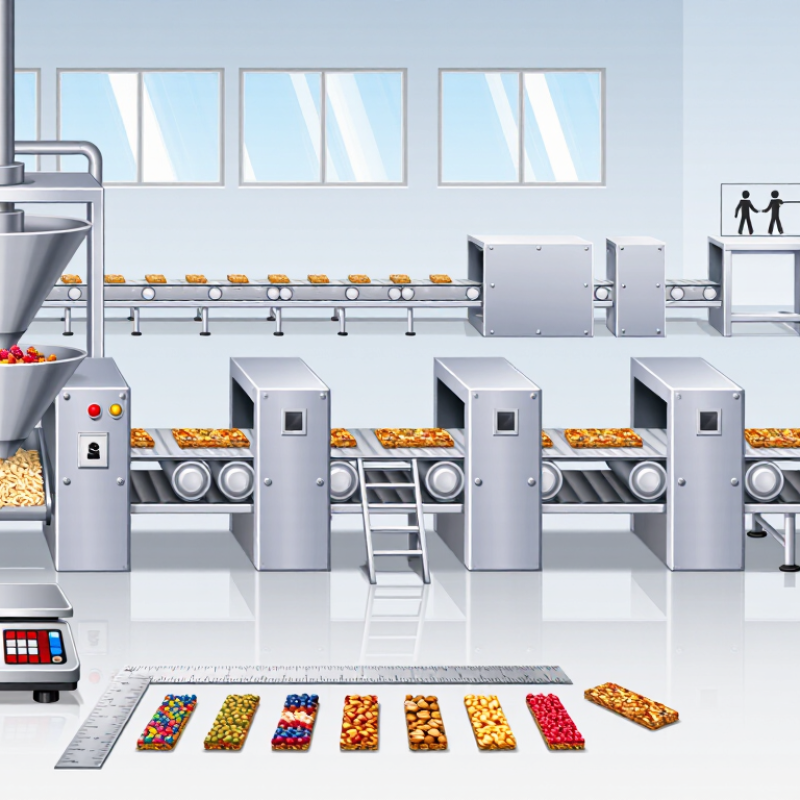
Define Your Cereal Bar Product and Production Goals
Before comparing cereal bar machines, define the product you intend to make. Decide the bar’s weight, shape, thickness, texture, and ingredients. A soft fruit bar needs different forming pressure than a crisp grain bar. Sticky syrups may require heated tanks and controlled dosing. Write these details down.
Be specific about production goals. Estimate daily output, acceptable weight variation, changeover frequency, and available floor space. Check whether the machine can handle nuts, seeds, dried fruit, or sensitive inclusions without damaging them. The target speed matters, but stable feeding matters more. Fast is not always better.
Ask suppliers for test runs using your actual recipe. Measure bar density, cutting accuracy, surface quality, and product loss. Review cleaning access, food-contact materials, temperature control, electrical standards, and operator safety features. Request maintenance records and spare-parts information. These documents show more than impressive photographs. Small gaps appear here.
For global sourcing, confirm installation support, training, packaging compatibility, and local service response times. A machine may perform well in a factory demonstration yet struggle with your humidity, syrup viscosity, or seasonal ingredients. I would leave room for uncertainty. Early specifications are often incomplete, and forcing a decision too quickly can create costly modifications later. Pilot production can reveal problems that brochures never mention.
Compare Machine Types, Features, and Production Capacities
When sourcing a cereal bar machine globally, compare forming methods before comparing prices. Rotary forming machines suit soft, uniform mixtures and continuous output. Slab forming lines compress the mixture into wide sheets, then cut precise bar lengths. Extrusion systems work well for dense recipes with nuts, seeds, or layered textures.
Production capacity should match your real demand, not an optimistic forecast. A small line may produce 100 to 300 kilograms per hour, while industrial systems can exceed 1,000 kilograms per hour. Confirm whether capacity changes with bar size, moisture, and recipe density. Ask for tested samples using your ingredients. Numbers on a brochure can look impressive.
Check the feeder, mixer, cutter, cooling tunnel, and wrapping interface as one system. Adjustable roller gaps help control weight and thickness. Servo-driven cutters can reduce length variation. Quick-release parts make cleaning faster. That matters during daily production. Also verify voltage, spare-part availability, operator training, and remote support across borders. Stainless steel contact surfaces and documented sanitation procedures improve reliability. Do not ignore noise levels or floor space.
I would not choose the fastest machine automatically. A line running too quickly may create cracked edges, uneven compression, or frequent stoppages. This is where many sourcing plans need more reflection. Request factory acceptance tests, maintenance schedules, electrical documents, and clear installation requirements before signing. A slightly slower machine may deliver steadier quality and simpler operation.
Evaluate Ingredients, Bar Formats, and Processing Requirements
Choosing a cereal bar machine starts with the recipe, not the machine catalog. Oats, rice crisps, seeds, nuts, and dried fruit behave differently under pressure. Sticky syrups may require heated mixing tanks and controlled dosing. Low-moisture recipes often need gentler compression. Measure moisture, bulk density, and particle size before requesting quotations. Small differences can cause cracks, loose edges, or uneven weights. It sounds basic. It is not.
Bar format also affects the production line. Soft granola bars may need slab forming, cooling, and wire cutting. Thin snack bars may require rotary molding or precise guillotine cutting. Filled bars create another challenge. Their layers must remain aligned during compression. Ask suppliers for samples using your actual ingredients. A machine that performs well with dry flakes may struggle with fruit paste. Trial results should include weight variation, cutting accuracy, surface damage, and cleaning time.
Processing requirements deserve equal attention during global sourcing. Check heating ranges, conveyor speed, changeover procedures, and electrical compatibility. Confirm whether operators can adjust pressure without complex tools. Food-contact surfaces should be clearly documented and easy to inspect. Request manuals, spare-parts lists, training plans, and factory acceptance tests. In practice, suppliers may promise a wider output range than trials prove. That gap needs written evidence. I would also leave room for doubt. A perfect sample run can hide problems caused by seasonal ingredients, humidity, or tired operators. Test those conditions before committing.
Check Supplier Quality, Compliance, Service, and Customization
How to Choose a Cereal Bar Machine for Global Sourcing?
Supplier quality should be checked on the factory floor, not only in a polished quotation. Inspect stainless-steel surfaces, welds, guards, conveyors, and electrical cabinets. Ask for a live trial using your cereal mixture, syrup, nuts, and target moisture level. Measure output, bar weight, cutting accuracy, and cleaning time. Ask for evidence. Do not guess.
Compliance requires more than one certificate. Request food-contact declarations, material specifications, electrical safety documents, and machine risk assessments. Confirm that documents match the exact machine model and production site. Local installation rules may also affect voltage, guarding, sanitation, and operator training. A reliable supplier provides traceable records, clear manuals, and practical commissioning support. Small details matter.
Service can protect production better than a low purchase price. Check spare-parts availability, remote troubleshooting, technician response times, and warranty boundaries. Discuss customization carefully, including bar dimensions, cooling length, cutter design, hopper capacity, and recipe changes. Ask whether modifications are tested before shipment. I once underestimated changeover time; the machine performed well, but daily cleaning took longer than expected. That mistake changed how I evaluate access panels and tool-free components. Customization is useful, but excessive complexity can create more maintenance points. Keep the design practical for the operators who will use it.
Calculate Total Costs, Installation Needs, and Long-Term Value
How to Choose a Cereal Bar Machine for Global Sourcing?
Calculate Total Costs, Installation Needs, and Long-Term Value
A low purchase price can hide expensive decisions. Build a total-cost sheet before comparing cereal bar machines. Include equipment, packaging, freight, insurance, import duties, installation, training, spare parts, and energy use. Request a line-by-line quotation with clear delivery terms. Vague pricing creates unpleasant surprises.
Measure the production room carefully. Record door widths, ceiling height, floor loading, drainage, power supply, and compressed-air capacity. A machine may fit on paper but fail at the loading bay. Confirm voltage and frequency with a qualified local electrician. Ask whether technicians can install the line remotely or travel to your facility. Travel costs, translation, and lost production days deserve a place in the budget.
Long-term value depends on stable output, safe cleaning, and accessible service parts. During supplier discussions, request trial data using your recipe, including nuts, dried fruit, or sticky syrups. Check changeover time and waste levels. A ten-minute delay repeated every batch becomes a serious annual cost. I have seen buyers focus on hourly capacity and overlook cleaning labor. That was a costly mistake.
Do not trust a perfect spreadsheet. Labor turnover, ingredient variation, and seasonal demand can weaken its assumptions. Calculate conservative, expected, and high-cost scenarios. Review warranty coverage, software support, manuals, and preventive-maintenance schedules. A durable machine is useful, but practical support often protects value longer.
 skip to Main Content
