 skip to Main Content

10 Best Conveyor Equipment Suppliers for Global Buyers?
Choosing the right conveyor supplier can shape an entire material-handling operation. A reliable partner affects production speed, worker safety, maintenance costs, and delivery schedules. This guide reviews ten leading Conveyors Equipment suppliers for global buyers, focusing on practical performance rather than attractive brochures.
The comparison considers belt conveyors, roller systems, modular designs, and customized handling lines. It examines frame quality, motor efficiency, load capacity, control systems, and installation support. Buyers should also check belt width, throughput, product temperature, and available spare parts. A supplier may offer excellent machinery but weak after-sales service. That difference becomes painful when a replacement motor is needed during peak production.
Global purchasing requires more than a competitive quotation. Each supplier is assessed through published technical information, industry experience, customer support capabilities, and compliance documentation. Attention is also given to export experience, communication, lead times, warranty terms, and local service networks. Certifications matter, but they should be verified for the specific model ordered.
No supplier is perfect. Some companies excel at heavy-duty systems but provide limited flexibility for smaller facilities. Others offer fast customization but higher long-term maintenance costs. These trade-offs deserve honest consideration. The ranking is therefore a practical starting point, not a final purchasing decision. Buyers should request drawings, performance data, reference projects, and a detailed total-cost estimate before signing contracts. A short factory video is useful. It is not proof of reliability. Careful questions still matter.
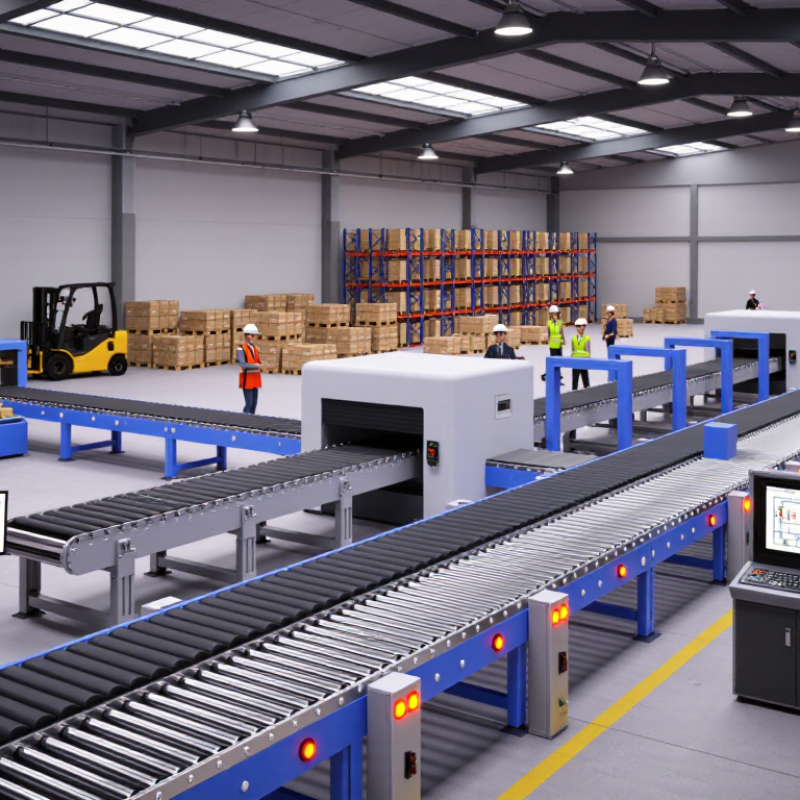
What Conveyor Equipment Suppliers Provide and Why They Matter
Conveyor equipment suppliers do more than ship belts and rollers. Reliable suppliers study product weight, package size, speed, incline, and available floor space. They may provide belt conveyors, screw units, chain systems, sortation modules, drives, guards, and control panels. The useful difference appears in the details. A correctly sized motor should start smoothly, not jerk a loaded line. A food-handling line may need washable surfaces and sealed bearings. A dusty warehouse needs stronger protection around sensors and drive components.
Experienced suppliers normally offer layout drawings, load calculations, installation guidance, testing, and operator training. They should explain limits clearly, including noise, temperature, maintenance access, and emergency-stop locations. This documentation supports safer purchasing and more consistent operation across sites. After-sales service matters when a bearing fails during a peak shipping shift. Fast spare-parts identification can prevent hours of avoidable downtime. Ask for response times, warranty terms, service coverage, and references from comparable facilities.
Price alone can mislead global buyers. A cheaper conveyor may require frequent belt tracking or manual cleaning. A higher initial cost can make sense when controls reduce labor and stoppages. Still, supplier claims need testing. Request performance data under realistic loads, not ideal showroom conditions. I would also inspect the maintenance plan before approving a purchase. One overlooked access panel can turn a ten-minute inspection into an afternoon repair. No supplier gets every prediction right. Transparent communication makes those gaps easier to correct.
10 Best Conveyor Equipment Suppliers for Global Buyers? - What Conveyor Equipment Suppliers Provide and Why They Matter
A practical comparison of anonymized supplier profiles based on equipment specialization, engineering scope, compliance support, service capability, and typical buyer requirements.
| No. | Supplier Profile | Primary Equipment Scope | Typical Industries | Engineering Capability | Common Compliance Support | After-Sales Services | Best Buyer Fit | Why It Matters |
|---|---|---|---|---|---|---|---|---|
| 1 | Heavy-Duty Bulk Handling Specialist |
| Mining, quarrying, aggregates, cement, ports, and power generation | Layout design, load calculations, dust-control interfaces, take-up selection, and conveyor guarding | Machine risk assessment, ISO-based quality documentation, CE or UKCA technical files where applicable | Wear-part planning, inspections, belt tracking support, and maintenance training | High-tonnage projects | Suitable for continuous material flow and demanding operating environments |
| 2 | Warehouse Automation Integrator |
| Distribution centers, e-commerce, parcel handling, retail, and third-party logistics | Material-flow analysis, throughput modeling, warehouse layout integration, controls coordination, and commissioning | Electrical safety documentation, machinery safety assessment, and programmable control documentation | Remote diagnostics, preventive maintenance schedules, spare motor planning, and operator training | High-throughput facilities | Helps reduce manual handling and maintain consistent order-processing flow |
| 3 | Food and Hygienic Conveyor Specialist |
| Food processing, beverage, bakery, dairy, meat, and pharmaceutical packaging | Hygienic design review, cleanability assessment, product-transfer design, and drainage considerations | Food-contact material documentation, hygienic design records, and applicable electrical conformity documents | Sanitation guidance, belt replacement procedures, inspection plans, and hygiene-focused training | Strict hygiene processes | Supports cleaning efficiency, contamination control, and reliable product handling |
| 4 | Parcel and Airport Logistics Specialist |
| Airports, parcel hubs, courier networks, postal facilities, and logistics campuses | Peak-volume analysis, system redundancy planning, barcode or scanner integration, and line balancing | Safety guarding, emergency-stop architecture, electrical schematics, and site acceptance documentation | Shift-based service planning, component replacement, uptime monitoring, and technical support | Time-critical operations | Improves throughput and helps protect delivery schedules during volume peaks |
| 5 | Modular Factory Conveyor Supplier |
| General manufacturing, consumer goods, packaging, assembly, and light industrial production | Modular line design, workstation integration, speed matching, product orientation, and changeover planning | Machine safety documentation, electrical drawings, and applicable regional conformity support | Modular replacement parts, line modifications, troubleshooting, and operator instruction | Flexible production lines | Allows production layouts to be expanded or reconfigured as products change |
| 6 | Vertical and Space-Saving Conveyor Specialist |
| Multi-level warehouses, retail distribution, packaging, manufacturing, and cold-chain facilities | Vertical travel calculations, floor-loading review, transfer synchronization, and space-utilization studies | Guarding design, access-control documentation, risk assessment, and installation records | Wear-part replacement, lift inspection, alignment checks, and service agreements | Limited floor space | Uses building height to connect levels while reducing horizontal footprint |
| 7 | Container and Pallet Handling Supplier |
| Automotive, appliance manufacturing, warehouses, distribution, and palletized goods handling | Load-rating analysis, pallet compatibility review, accumulation logic, and conveyor-zone design | Machine guarding, control-panel documentation, safety circuit review, and acceptance testing support | Roller and chain replacement, lubrication schedules, alignment service, and troubleshooting | Palletized loads | Designed for stable movement, accumulation, and transfer of standardized unit loads |
| 8 | Recycling and Waste-Sorting Specialist |
| Municipal waste, recycling, scrap processing, composting, and resource recovery | Material-characteristic review, anti-spillage design, access planning, dust management, and wear analysis | Risk assessment, guarding documentation, electrical conformity records, and environmental interface support | Wear-liner replacement, belt inspections, cleaning plans, and component availability planning | Abrasive materials | Helps maintain material separation and equipment availability in harsh conditions |
| 9 | Cold-Chain and Temperature-Controlled Conveyor Supplier |
| Frozen food, cold storage, pharmaceutical logistics, seafood, and temperature-sensitive distribution | Low-temperature material selection, condensation management, thermal movement review, and sanitation planning | Material certificates, hygienic documentation, electrical safety files, and site validation support | Cold-environment inspection, belt and bearing replacement, cleaning guidance, and remote support | Temperature-sensitive goods | Reduces handling interruptions where moisture, cold, and sanitation requirements overlap |
| 10 | Custom Export Project Supplier |
| International industrial projects, ports, agriculture, construction materials, and process plants | Site surveys, multilingual drawings, containerized shipment planning, interface management, and commissioning coordination | Export packing records, inspection plans, conformity documentation, bills of materials, and installation manuals | Remote commissioning, spare-parts lists, virtual training, and regional service coordination | International projects | Reduces coordination risk when equipment, documentation, and installation cross borders |
Note: Actual conveyor selection depends on material characteristics, load, speed, incline, operating environment, safety requirements, local regulations, installation conditions, and required integration with upstream and downstream equipment.