What Are the Best Automated Valves from China?
Choosing the best automated valves from China requires more than comparing prices or product photographs. The right choice depends on media type, pressure, temperature, actuation speed, and maintenance access. A valve controlling clean water may fail quickly in abrasive slurry. Small details matter.
Greg McMillan, an ISA Fellow and respected process-control author, has said, “Control begins with understanding the process.” That principle applies directly to automated valves. Buyers should examine body materials, seat design, actuator torque, enclosure protection, and control-signal compatibility. They should also request pressure-test records, material certificates, and traceable inspection data. Factory audits can reveal practical issues that brochures often hide.
China offers a broad manufacturing base. Established suppliers can provide stainless-steel ball valves, butterfly valves, gate valves, globe valves, and customized pneumatic systems. Some factories operate modern machining centers and automated testing benches. Others depend heavily on subcontractors. The difference is significant.
Price is not proof of value.
A reliable evaluation should include cycle-life testing, response accuracy, spare-part availability, and after-sales support. Certifications also require careful checking, because a logo alone does not confirm current compliance. Buyers should verify the issuing body and certificate scope.
This guide compares leading Chinese manufacturers through a practical lens. It considers engineering capability, quality consistency, customization, delivery performance, and long-term operating risk. No supplier is perfect. Even strong factories may show uneven results between product lines. That limitation deserves attention before any purchase decision.
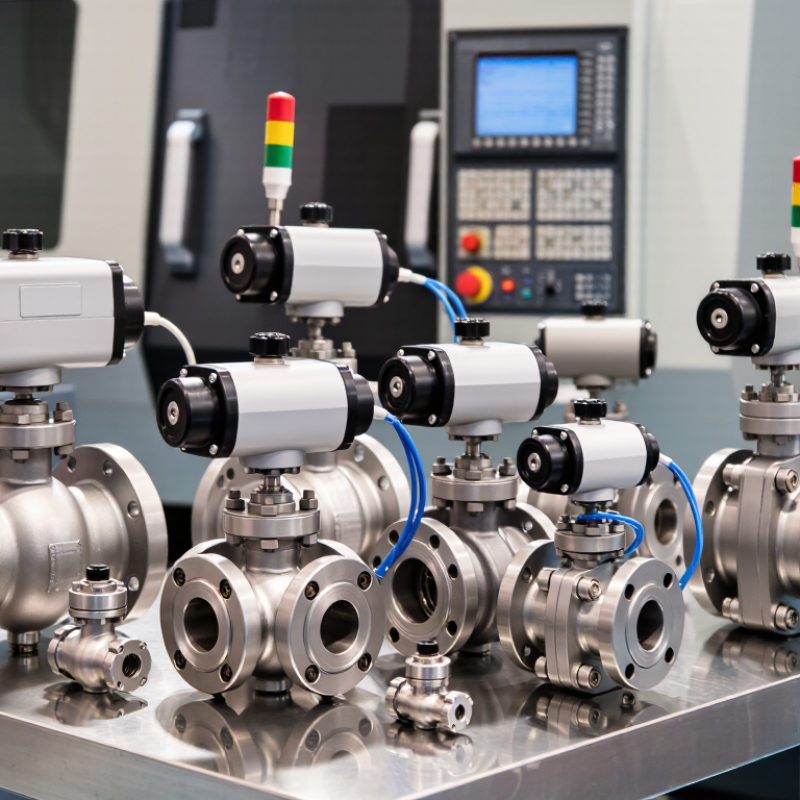
Classify Chinese Automated Valves by Actuation Type and Process Duty
The best automated valves from China should be classified by actuation type and process duty, not price alone. Electric actuators suit clean water, HVAC systems, and many utility lines. They provide accurate positioning and useful feedback signals. Pneumatic actuators respond quickly and work well in repeated isolation or control cycles. They are common around compressed-air systems, chemical skids, and production lines. Hydraulic actuation offers high torque for large valves and demanding pressure conditions. It needs careful attention to oil cleanliness and leak prevention.
Process duty changes the valve choice. A quarter-turn ball or butterfly valve often handles isolation effectively. Globe valves provide finer throttling but may create greater pressure loss. For slurry, abrasive particles can damage ordinary seats and stems. Pinch or lined designs may perform better. Corrosive media require compatible body, trim, and seal materials. High-temperature service demands verified packing, clearances, and actuator limits. Match the duty.
In practical sourcing, request material certificates, pressure-test records, actuator torque data, and cycle-test results. A valve that moves in the workshop may fail after months of condensation, vibration, or poor alignment. I have seen specifications focus heavily on body pressure while overlooking signal failure behavior. That is a weakness worth challenging. Define fail-open or fail-closed action before ordering. Check enclosure ratings, manual override access, response time, and control compatibility. Field inspection should confirm markings, wiring, flange dimensions, and serial traceability. Fit matters. Supplier documentation is useful, but witnessed testing gives stronger confidence.
Compare Cv, Pressure Class, Flow Range, and Leakage Standards
When sourcing automated valves from China, compare Cv before comparing prices. Cv means the water flow in US gallons per minute at 60°F, with a 1 psi pressure drop, under ISA/IEC 60534-2-1. A larger Cv can reduce pumping loss, but it may weaken control near low flow. I have seen oversized valves hunt around the setpoint. That detail is often missed.
Pressure class also needs careful reading. ASME B16.34 rates Class 150, 300, and 600 by pressure and temperature, not pressure alone. A Class 300 valve may not withstand the same pressure at 400°F as at ambient conditions. Chinese documentation may also list PN ratings under GB/T standards. Ask for the pressure-temperature table, body material, actuator torque, and test temperature. Without them, “high pressure” is only a sales phrase.
Flow range should match the process, not the pipe diameter. IEC sizing data can expose whether a valve reaches stable control at 10%, 50%, or 90% opening. Request verified rangeability and shutoff torque records. Leakage requirements should name the test standard. ISO 5208 and API 598 define pressure testing practices, while IEC 60534-4 identifies leakage classes; Class IV permits up to 0.01% of rated valve capacity, while Class VI targets very low bubble leakage. These classes are not interchangeable. The comparison remains imperfect when suppliers publish nominal Cv but omit test uncertainty, actuator duty cycle, or seat wear data.
What Are the Best Automated Valves from China?
Comparison of representative valve configurations by flow coefficient (Cv), pressure class, flow range, and commonly specified leakage standards.
| Valve configuration |
Typical pressure rating |
Approx. water flow at ΔP = 1 bar |
Common leakage reference |
| Ball valve |
PN16–PN63 / Class 150–300 |
0.9–5,190 m³/h |
ISO 5208 Rate A; API 598 commonly specified |
| Butterfly valve |
PN6–PN40 / Class 150 |
17–6,920 m³/h |
ISO 5208 Rate A for resilient seats |
| Globe valve |
PN16–PN100 / Class 150–600 |
0.09–1,384 m³/h |
ISO 5208; FCI 70-2 Class IV–VI when specified |
| Gate valve |
PN16–PN100 / Class 150–600 |
8.7–10,380 m³/h |
ISO 5208 Rate A; API 598 commonly specified |
The chart shows representative Cv ranges for commonly manufactured automated valve sizes. Approximate water flow is calculated using Q ≈ 0.865 × Cv at a 1 bar pressure drop and specific gravity of 1. Actual performance depends on valve size, trim, actuator selection, fluid properties, temperature, and the specified testing standard.
Evaluate Electric Valve Torque, IP Ratings, and IEC 60529 Protection
Selecting automated valves from China requires more than comparing price and body material. Electric valve torque must match the valve’s breakaway, running, and seating requirements. Engineers should measure actual torque, then add a practical safety margin, often 25% to 50%. Oversizing is not always safer. It can increase power demand, closing shock, and stem wear. A 2024 MarketsandMarkets report valued the global industrial valves market at over USD 78 billion and forecast continued growth through 2029. That expansion makes technical verification more important, not less.
IP protection should be checked against IEC 60529, not marketing language. IP65 protects against dust and water jets. IP67 adds temporary immersion protection, typically up to one metre for 30 minutes under test conditions. IP68 requires an agreed immersion depth and duration. That detail matters. An outdoor actuator may pass an IP test but still fail from condensation, salt spray, poor cable glands, or ultraviolet exposure. IEC 60529 does not certify chemical resistance or long-term corrosion performance.
Request torque curves, duty-cycle data, test records, and the exact IP test basis. Check whether the actuator reaches rated torque at low voltage and cold temperatures. Field inspections often reveal loose terminals and undersized cables. These are simple failures. I would also question unusually generous torque claims without measurement conditions. A valve that moves smoothly in a workshop may behave differently after scaling, pressure changes, or months of cycling. Specification review needs humility.
Assess Pneumatic Valve Response Time, Air Use, and ISO 5211 Mounting
When assessing automated valves from China, response time should be tested, not copied from a catalog. The complete cycle includes the solenoid, actuator, valve, and control signal. A published 0.2-second figure may change with supply pressure, tubing length, load torque, and ambient temperature. In practical testing, record opening and closing times at 4, 5, and 6 bar. Use a pressure sensor and position feedback.
Air consumption deserves equal attention. The U.S. Department of Energy’s Improving Compressed Air System Performance sourcebook states that compressed air can consume about 10% of industrial electricity. It also identifies leakage as commonly responsible for 20–30% of compressor output. Measure free-air consumption per cycle, not only the actuator size. A small valve with poor seals may waste more air than a larger, better-fitted assembly. That detail is easy to miss.
ISO 5211 defines actuator mounting dimensions and drive interfaces. It does not guarantee speed, sealing quality, or torque accuracy. Match the valve’s breakaway torque, running torque, and safety factor with the actuator output. Laboratory figures are useful, but plant testing is stronger evidence. I would also inspect shaft alignment, manual override clearance, and repeated-cycle drift. The weak point may appear after 50,000 cycles. Independent test records, traceable materials, and documented factory quality controls provide stronger evidence than polished sales language. Some specifications remain incomplete. That deserves caution.
Select the Best Chinese Valve by ISO, IEC, API, and Service Data
When evaluating automated valves from China, I start with operating conditions, not catalog claims. Confirm the medium, pressure, temperature, pipe size, cycling frequency, and required fail position. A valve suitable for clean water may fail quickly in abrasive slurry. Small details matter, including actuator torque margins and enclosure protection in humid plants.
ISO, IEC, and API documents provide a practical screening framework. ISO 5211 helps verify actuator-to-valve mounting dimensions. IEC 60534 is useful for control valve performance and sizing. API 6D may apply to pipeline isolation valves, while API 598 supports pressure and leakage inspection. Check the exact edition, test scope, and certificate validity. A logo on a PDF is not enough. Ask for material certificates, pressure-test records, calibration results, and serial-number traceability. Independent witnessing adds credibility.
Service data often separates a dependable valve from an attractive quotation. Request cycle-test results, torque curves, response time, leakage rates, repair history, and actuator failure records. Compare these figures with your actual duty cycle. I also prefer a factory audit and a witnessed factory acceptance test. One weakness in my own review process is trusting clean spreadsheets too quickly. Real evidence can be untidy. Ask how the valve performed after repeated cycling, low temperatures, power loss, and manual override. Review spare-part lead times and technician support before approval. Great documentation cannot compensate for poor field service.
 skip to Main Content